IELTS Cue Card Sample Answer # Building That Impressed You

There are so many  construction sites around the world, so many that we see everyday. It could be an office or a house or may be something with historical importance. No matter what, there are certain buildings which make us go wow. The ones which we want to live in or work for or may be visit again and again. Let us today have a look at a cue card related to a building that impressed you.

Describe a building or construction that you have seen and impressed you.
You should say:
– where it was
– what it looks like
– when did you saw it.

There are lot of buildings that I have visited but the one architecture that has taken me by storm is the Bada Imambara in Lucknow.  Bhool Bhulaiya is a labyrinth of hundreds of narrow stairway passages, some of which have dead-ends, some end at precipitous drops while others lead to entrance or exit points. We went to the place with a guide and even with him there were times when we felt lost.

It was enormous and while taking a stroll down it I realized if while walking on it, it is so difficult to remember where we came from and where we need to go, how would have the people created the architecture. The Bada ImamBara is said to be the world’s largest arched room without any pillars.

I remember my relatives came to our house, while we were living in Lucknow, during I suppose 2002. I was very young that time and going there was amazing. As a child, there were certain things that fascinated me, others I did not understand but whatever it be, it was great to be lost with my family.
Building That Impressed You


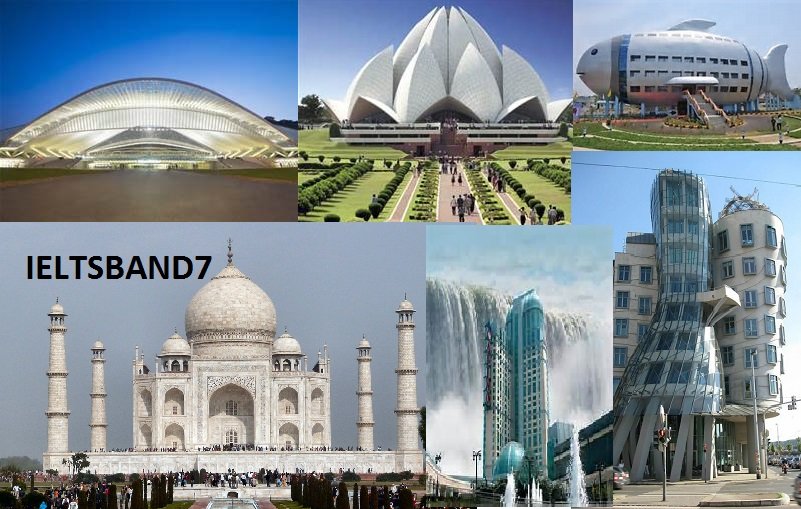
Our country has some of the best architectural buildings and I have had the chance of visiting lot of them. But, the one building that I fell in love with was Taj Mahal. Taj Mahal is regarded as the sign of love and there is so much of great architecture in it that anyone can fall in love with it.

I remember having visited the Taj Mahal when I was around 13 years old and it was a truly amazing experience. As kids, we, as in me and my brother were very inquisitive about the place and ended up asking lot of questions to the guide. So, he told us about why it was made and what is the story behind it. But, when you look at Taj Mahal, I believe it was made with so much of true intentions and true love that it gives you peace and makes you calm down.

Taj Mahal was made with white marble inlaid with semi-precious stones. It has got a central dome along with four smaller domes; four slender towers, or minarets, stood at the corners. There are verses from the Quran were inscribed in calligraphy on the arched entrances to the mausoleum, in addition to numerous other sections of the complex. In the lower floor are the domes of Mumtaz Mahal and Shah Jahan.

It is for the love of Mumtaz that Shah Jahan made the Taj Mahal. Although, with the environment issues coming up, there are lot of problems that Taj Mahal has faced, but it still manages to bring in lot of tourists from all around the world.

IELTS BAND7

The Bright Side In America # Improve Vocabulary

Vocabulary is indeed a very important part of preparing for IELTS. If you are preparing for IELTS, then it is very important for you to understand the vocabulary and practice it well, is important to score well in the IELTS exam. This time we are looking at an article written on TIME magazine and understand it for the vocabulary.

Source – TIME

[PARA 1]

Charity–humanity’s most benevolent impulse–is a timeless and borderless virtue, dating at least to the dawn of religious teaching. Philanthropy as we understand it today, however, is a distinctly American phenomenon, inseparable from the nation that shaped it. From colonial leaders to modern billionaires like Buffett, Gates and Zuckerberg, the tradition of giving is woven into our national DNA.

[PARA 2]

Like so many of our social structures, the formal practice of giving money to aid society traces its origin to a Founding Father. Benjamin Franklin, an icon of individual industry and frugality even in his own day, understood that with the privilege of doing well came the price of doing good. When he died in 1790, Franklin thought to future generations, leaving in trust two gifts of 1,000 lb. of sterling silver. One to the city of Boston, the other to Philadelphia. Per his instruction, a portion of the money and its dividends could not be used for 200 years.

[PARA 3]

While Franklin’s gifts lay in wait, the tradition he established evolved alongside the young nation. After the Civil War, rapid industrialization concentrated unfathomable wealth in the hands of a few, creating a period of unprecedented inequality. In response, the steel magnate Andrew Carnegie pioneered scientific philanthropy, which sought to address the underlying causes of social ills, rather than their symptoms. In his lifetime, Carnegie gave away more than $350 million, the equivalent of some $9 billion today. His 1889 essay “Wealth”–now better known as Carnegie’s “The Gospel of Wealth”–effectively launched modern philanthropy by creating a model that the wealthy continue to follow.

[PARA 4]

Two decades later, John D. Rockefeller endowed the Rockefeller Foundation, which soon became the largest such “benevolent trust” in the world. Prior to World War II, the Rockefeller Foundation provided more foreign aid than the entire federal government.

[PARA 5]

Other, often far less well-known men and women have played a critical role in philanthropy’s evolution. One of my personal heroes is Julius Rosenwald, who made his fortune building Sears, Roebuck and Co. With his giving, Rosenwald helped construct more than 5,300 schools across the segregated South and opened classroom doors to a generation of African-American students, including Maya Angelou and Congressman John Lewis.

[PARA 6]

America’s philanthropic instinct is not limited to the rich. The nation’s history is rife with people like Oseola McCarty, a Mississippi washerwoman who gave away her life savings of $150,000 in 1995 to fund college scholarships for low-income students with promise.

[PARA 7]

What accounts for this culture of generosity? The answer is not solely altruistic. Incentives in the tax code, for one, encourage the well-off to give. And philanthropy has long helped improve the public image of everyone from robber barons to the new tech elite.

[PARA 8]

More troubling, however, are the foundational problems that make philanthropy so necessary. Just before his death, Dr. Martin Luther King Jr. wrote, “Philanthropy is commendable, but it must not cause the philanthropist to overlook the circumstances of economic injustice which make philanthropy necessary.”

[PARA 9]

Indeed, King illuminates a central contradiction: philanthropy is an offspring of the market, conceived and sustained by returns on capital. Yet its most important responsibility is to help address the market’s imbalances and inadequacies.

[PARA 10]

Today institutional giving is undergoing a radical transformation. Priscilla Chan and Mark Zuckerberg made headlines for committing $45 billion in Facebook stock through a limited liability corporation. They’re among a host of emerging donors who are experimenting with approaches to giving away their fortunes outside the boundaries of traditional foundations.

[PARA 11]

Only 26 years ago, the last of Franklin’s gifts were finally made available, having multiplied to $6.5 million. More than the sum, they represent a broader principle. We are custodians of a public trust, even if our capital was derived from private enterprise. The most important obligation is ensuring that the system works more equally and more justly for more people. This belief is core to our national character. America’s greatest strength is not the fact of perfection, but rather the act of perfecting.

WORDMEANINGSYNONYMS
1. BenevolentWell-meaning and kindlyBenign, caring, compassionate, generous, humane, philanthropic
2. virtueMoral excellence; goodness; righteousnessAdvantage, character, ethic, excellence, faith, generosity, goodness, ideal, kindness, love, merit, morality, purity, quality, rectitude, righteousness, value
3. philanthropyAltruistic concern for human welfare and advancement, usually manifested by donations of money, property, or work to needy persons by endowment of institutions of learning and hospitals and by generosity to other socially useful purposes.Charity, generosity, alms, alms-giving, altruism, assistance, benefaction, beneficence, contribution, dole, donation, endowment, fund, relief
4. frugalityThe quality of being frugal, or prudent in saving; the lack of wastefulnessModeration, prudence, thrift, avarice, carefulness, conservation, economy, miserliness, niggardliness, parsimoniousness, parsimony, penuriousness, providence, saving, stinginess
5. waitstay where one is or delay action until a particular time or event:Interval, down, halt, downtime, hold, interim, rest, stay
6. unfathomableNot able to fathom or completely understand; incomprehensibleBoundless, immeasurable, infinite
7. unprecedentedWithout previous instance; never known or experiencedBizzare, extraordinary, fantastic, miraculous, new, remarkable, singular, uncommon, unheard- of, unique, unparalleled, unrivaled, unusual
8. endowedTo provide with a permanent fund or source of incomeBlessed. Enriched, equipped, graced, suppilied
9. segregatedRestricting to one group, especially exclusively on the basis of racial or ethnic membershipIsolated, restricted, excluded, separated, discriminative
10. rifeOf common or frequent occurrence; prevalent; in widespread existence, activity or useAbundant, alive, plentiful, popular, prevalent, rampant, replete, abounding, common, current, epidemic, extensive, frequent
11. generosityReadiness or liberality in givingGoodness, hospitality, kindness, largesse, unselfishness, alms-giving, altruism, beneficence
12. altruisticUnselfishly concerned or devoted to the welfare of othersCharitable, humanitarian, magnanimous, philanthropic, all heart, benevolent, big, bleeding heart, considerate, good scout
13. incentivesSomething that incites or tends to incite to action or greater effort as a reward offered for increased productivityEncouragement, enticement, impetus, motivation, reason, stimulus, allurement, bait, carrot, catalyst, come- on, provocation, stimulant, insistence, exhortation
14. robberA person who robs (steals)Bandit, burglar, con artist, crook, looter, marauder, mugger, pickpocket, pirate, raider, rustler, shoplifter, swindler, thief, thug, brigand, buccaneer, cardsharper, cheat, chiseler, desperado, despoiler, fence, forager, fraud, hijacker, housebreaker, prowler, punk, safecracker, pillager, plunderer, operator
15. baronsA member of the lowest grade of nobilityAristocrat, lord, peer
16. contradictionA statement or proposition that contradicts or denies another or itself and is logically incongruousConflict, difference, disagreement, discrepancy, dispute, inconsistency, confutation, contravention, defiance, denial, dissension, incongruity, negation, opposite, opposition
17. radicalOf or going to the root or origin; fundamentalProfound, basal, bottom, cardinal, constitutional, essential, native, natural, organic, original, primary, primitive, deep-seated, foundational, inherent, innate, intrinsic, meat-and-potatoes, primal
18. obligationSomething by which a person is bound or obliged to do certain things, and which arises out of a sense of duty or results from custom, law etc.Accountability, agreement bond, burden, commitment, constraint, contract, debt, duty, liability, necessity, need, promise, requirement, right, trust, understanding

IELTSBAND7

IELTS Listening Sample Questions # Food Bank

Food Bank

The audio has been taken from BBC 6 minutes English. You can even download the audio from the given link –

Answer the following questions in NO MORE THAN THREE WORDS

  1.  How many British people are estimated to have used food banks?
  2. In which year did the financial crisis took place in Britain?
  3. In which year were the cut offs to the welfare system made?
  4. What is the phrase being used to talk about underemployment?
  5. Which phrase is used to mean “unlimited access”?
  6. What is the meaning of limited stocks?
  7. Which term is used to refer to people who want something for nothing?
  8. Which term is used to refer to a food in a can that needs to be only heated?

ANSWERS

  1. 500,000.
  2. 2008
  3. 2013
  4. zero-hours contracts
  5. open door
  6. shortage of goods
  7. scrounger
  8. tinned ready meals


IELTS BAND7

phone icon

IELTS Dehradun Uttarakhand Tel: 8439000086 , 8439000087

IELTS Listening Sample Questions # Outernet

Outernet

The audio has been taken from BBC 6 minutes English. You can download the audio from the given link –

Answer the following questions in NO MORE THAN THREE WORDS

  1. Which phrase has been used to mean isolated?
  2. What is the device called that stores books from the interenet and lets you read it even when you don’t have access to internet?
  3. What is the proportion of the world’s population that still has no internet access?
  4. Which term is used for the person who makes their own money called?
  5. Which word means that you send out signals or program?
  6. What is the synonym of drawback?
  7. Which word is used to symbolize that something is not connected to the internet?
  8. What is the other way of saying two-way?
  9. What is the right to use material without paying any fees called?
  10. Which word is used to refer to a tall metal tower?

ANSWERS

  1. cut off
  2. e-reader
  3. two thirds
  4. entrepreneur
  5. Broadcast
  6. disadvantage
  7. offline
  8. bi-directional
  9. copyright -free
  10. masts

IELTSBAND7

phone icon

IELTS Dehradun Uttarakhand Tel: 8439000086 , 8439000087

1 4 5 6 7 8 24